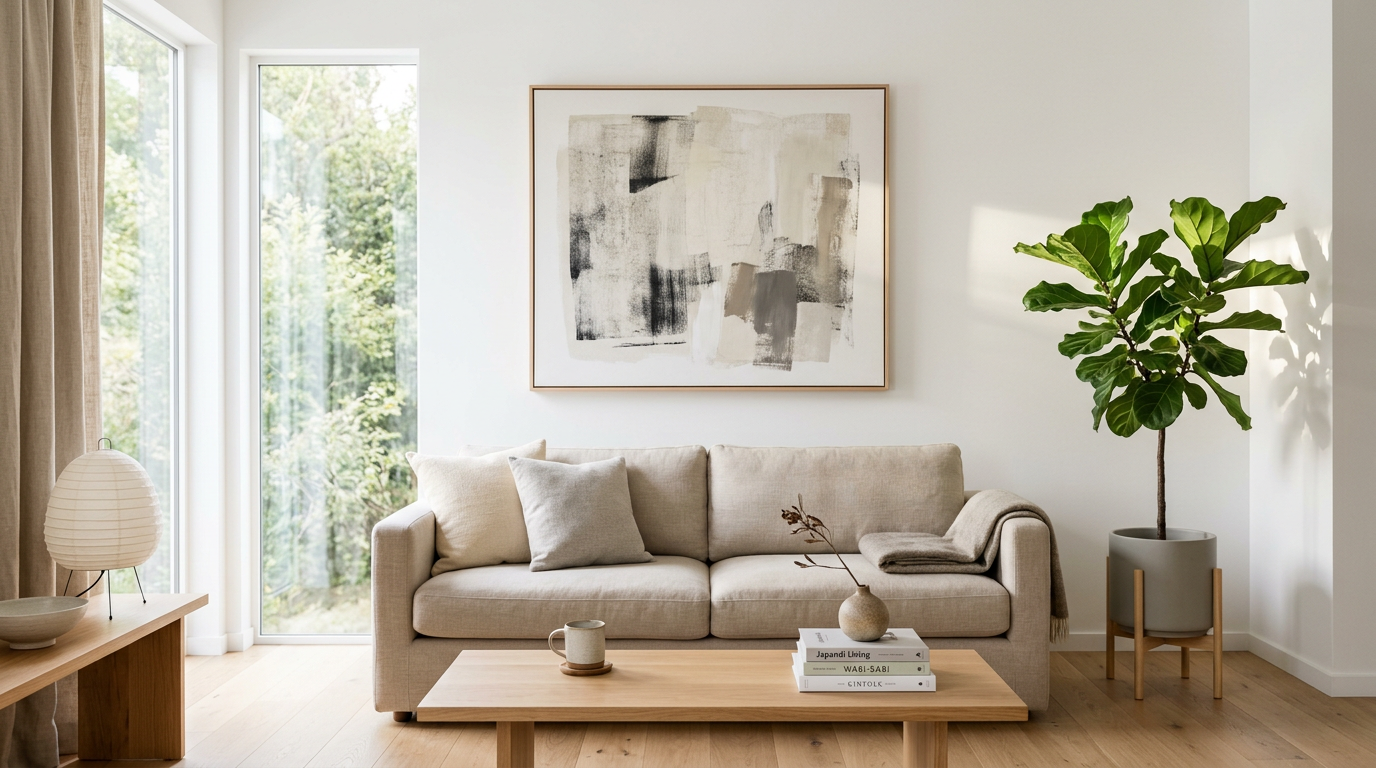
What Minimalism Really Means in Decor
Minimalist decor isn’t about having nothing — it’s about having only what matters. Every piece in a minimalist living room is chosen deliberately. The result is a space that feels calm, clean, and surprisingly warm when done right.
The Foundation: Declutter First
Before you buy a single new thing, remove what doesn’t serve you. Go through your living room piece by piece. For each item, ask: Is it useful? Is it beautiful? Does it bring me joy? If the answer to all three is no, it goes. Minimalism isn’t a style you layer on — it’s revealed when you strip away the excess.
Choosing Your Palette
Minimalist palettes lean neutral but aren’t limited to white. Warm grays, soft creams, pale wood tones, and muted earth tones all work beautifully. The key is restraint: limit yourself to three or four colors and use them consistently. For a deeper dive, see our color palette guide.
Furniture Selection
Quality Over Quantity
A minimalist living room might contain a sofa, one or two side tables, and a coffee table — and nothing else. When you have fewer pieces, each one is more visible and more important. Invest in quality construction and timeless design.
Clean Lines
Choose furniture with simple silhouettes. Low-profile sofas, slim-legged tables, unadorned shelving. Avoid ornate details, heavy carvings, or fussy hardware. The beauty is in the form itself.
Hidden Storage
Clutter is minimalism’s enemy. Choose furniture with integrated storage — a coffee table with drawers, a media console with doors, a sofa with under-seat storage. Everything has a place, and that place is out of sight.
The Art of Negative Space
In a minimalist room, what you leave empty is as important as what you fill. Don’t rush to occupy every wall, every surface, every corner. Empty space lets the room breathe and lets your chosen pieces stand out. A single vase on a long shelf has more impact than a shelf crowded with objects.
Thoughtful Accessories
One Statement Piece of Art
Instead of a gallery wall, choose one large, impactful piece. Abstract art, a large photograph, or a simple graphic print. Frame it simply and let it speak.
Plants as Living Decor
A single large plant — a fiddle leaf fig, monstera, or olive tree — adds life and warmth without clutter. One plant in a beautiful pot is more minimalist than many small plants scattered around.
Texture for Warmth
Minimalism can feel cold if you ignore texture. A wool throw, a linen cushion, a woven basket, and a wooden bowl add warmth through material variety rather than through quantity of objects.
Lighting for Minimal Spaces
Minimalist rooms thrive on natural light. Keep window treatments simple — sheer linen panels or no curtains at all. For artificial light, choose sculptural fixtures with clean forms. A single pendant, a pair of slim sconces, or an architectural floor lamp can provide both function and art.
Maintaining Minimalism
The hardest part of minimalist living isn’t setting it up — it’s maintaining it. Adopt a one-in-one-out rule: for every new item that enters, one existing item leaves. Do a regular audit of your space. Clutter creeps in gradually, so periodic editing keeps your living room intentional.
Minimalism Doesn’t Mean Impersonal
The most common criticism of minimalist spaces is that they lack personality. Counter this by choosing pieces with meaning — a handmade ceramic, a travel memento, a family heirloom. When you have only a few objects, each one carries more story and significance.
Recommended Minimalist Styles
If pure minimalism appeals to you, explore these related aesthetics that share its principles:
- Japandi style — blending Japanese restraint with Scandinavian warmth
- Wabi-sabi — embracing imperfection and natural materials
- Modern design — function-driven with clean forms