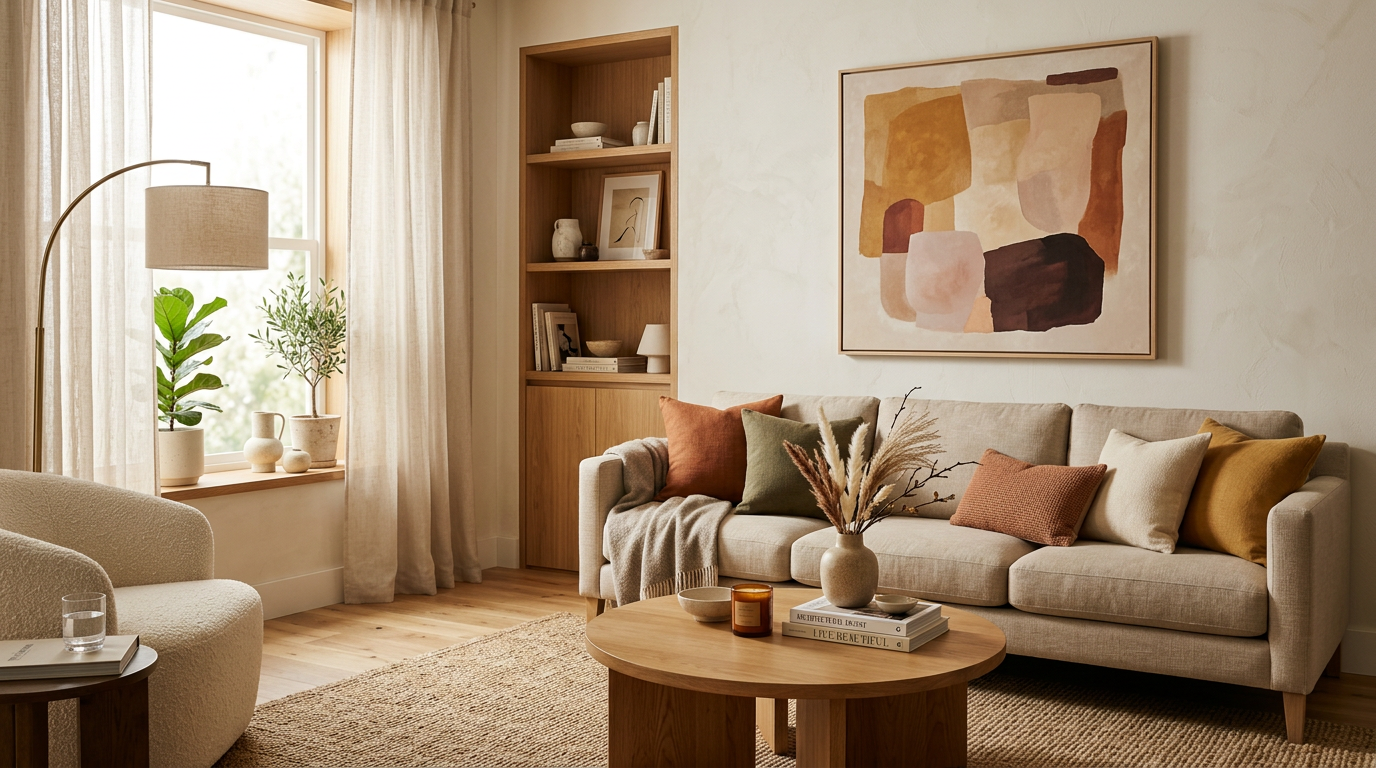
Why Your Living Room Color Palette Matters
The colors in your living room set the tone for your entire home. They influence how the space feels, how large it appears, and even how you feel when you walk through the door. A well-chosen color palette ties together furniture, textiles, and accessories into a cohesive design that feels intentional rather than accidental.
Start With Your Anchor Piece
Every room needs a starting point. Look at the largest piece in your living room — usually the sofa — and build your palette around it. If you have a neutral sofa, you have the freedom to go bold with accent colors. If your sofa is already a statement color, keep the rest of the palette more restrained.
The 60-30-10 Rule
Professional designers swear by this formula. Divide your room’s color distribution as follows:
- 60% dominant color — walls and large furniture pieces
- 30% secondary color — curtains, accent chairs, rugs
- 10% accent color — throw pillows, artwork, decorative objects
This creates visual balance without monotony. The dominant color grounds the room, the secondary adds depth, and the accent provides energy.
Popular Living Room Color Palettes
Warm Neutrals
A palette built on creams, tans, warm grays, and soft whites creates a welcoming, timeless space. Add texture through linen, wool, and wood to keep it from feeling flat. This approach works beautifully in both traditional and modern living room styles.
Cool and Calming
Soft blues, pale greens, and cool grays evoke a sense of tranquility. This palette works especially well in rooms with abundant natural light. Pair with white trim and natural wood accents for a Scandinavian-inspired look.
Earth Tones
Terracotta, olive, rust, and deep browns bring the outdoors in. Earth tones feel grounding and sophisticated, especially when combined with natural materials like stone, clay, and raw wood. This palette is perfect if you lean toward bohemian or wabi-sabi aesthetics.
Moody and Dramatic
Deep navy, charcoal, forest green, or even black walls make a powerful statement. Moody palettes work best in rooms with good lighting and when balanced with lighter furniture and metallic accents. They create intimacy and sophistication.
How Lighting Affects Your Colors
The same paint color can look completely different depending on lighting. North-facing rooms tend to cast cool, blue light, making warm colors appear muted. South-facing rooms get warm, yellow light that intensifies warm tones.
Always test paint samples on your actual walls and observe them at different times of day. What looks perfect at noon might feel completely different under evening lamplight. Consider how your lighting setup interacts with your chosen colors.
Testing Before Committing
Before painting entire walls, invest in sample pots or peel-and-stick color swatches. Place them in different spots around the room and live with them for a few days. Observe how they look:
- In morning light
- Under artificial lighting at night
- Next to your existing furniture
- Against your flooring
Connecting Rooms With Color
Your living room doesn’t exist in isolation. Consider the colors visible from adjacent rooms. You don’t need matching palettes, but they should feel harmonious when viewed together. Using a common undertone — warm or cool — across connecting spaces creates a natural flow throughout your home.
Making Small Living Rooms Feel Larger
If your living room is on the smaller side, lighter colors will help it feel more spacious. Painting walls, trim, and ceiling the same light color blurs the boundaries of the room. For more small-space strategies, check our guide on making small spaces feel bigger with color.
Final Tips
Trust your instincts but test your choices. Trends come and go, but you’re the one living in the space every day. Choose colors that make you feel comfortable and happy. A color palette you love will never go out of style.