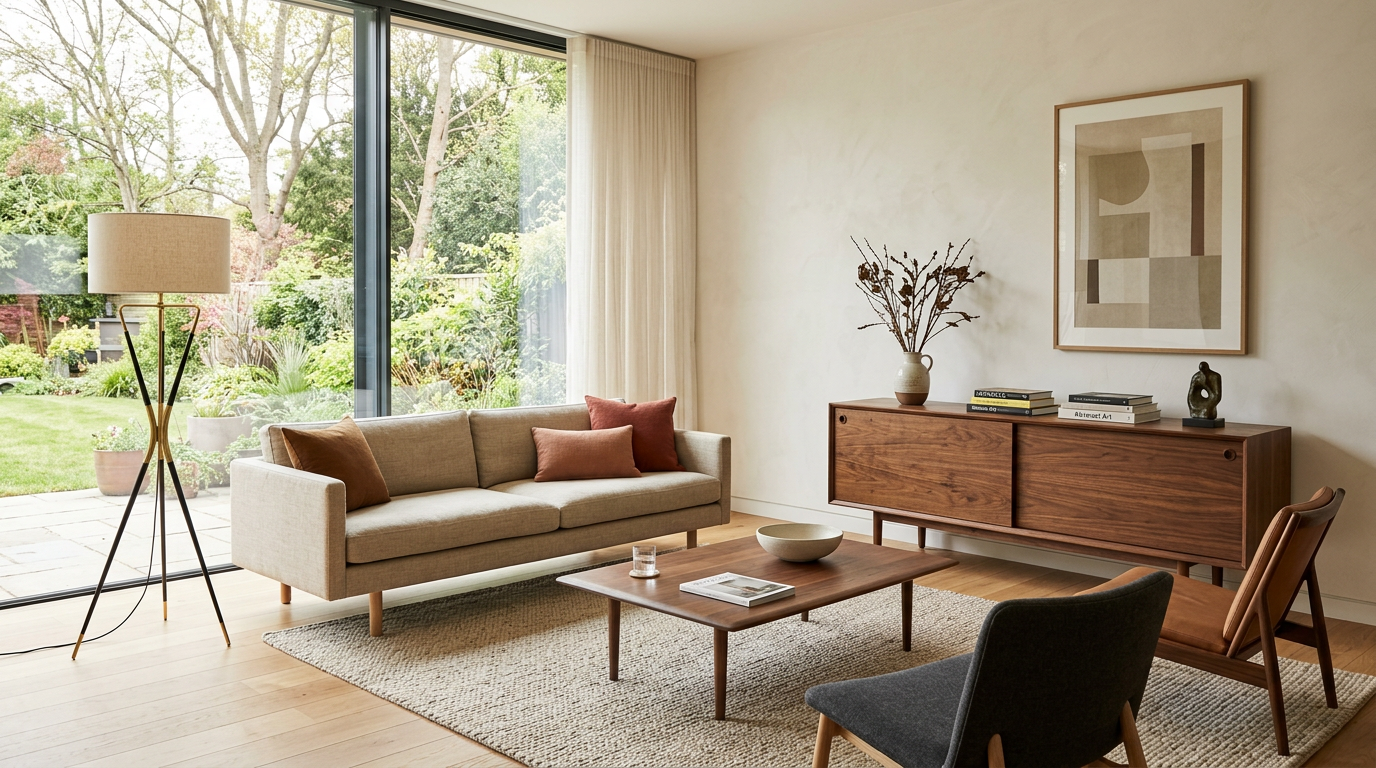
Defining Modern Living Room Style
Modern design is often confused with contemporary, but they’re distinct. Modern refers to a specific design movement rooted in the early-to-mid 20th century, characterized by clean lines, organic shapes, and a focus on function. Contemporary design, by contrast, reflects whatever is current.
A modern living room strips away the unnecessary while celebrating craftsmanship, natural materials, and purposeful design. Every piece earns its place.
Core Principles of Modern Design
Less Is More
The foundation of modern living room decor is restraint. This doesn’t mean empty — it means every object has intention. A single statement artwork on a large wall is more impactful than a gallery wall of small pieces. A beautifully designed sofa needs fewer accessories to shine.
Clean Lines and Geometric Forms
Modern furniture features straight lines, gentle curves, and geometric shapes. Think low-profile sofas with slim arms, round coffee tables, and architectural shelving. Avoid ornate details, heavy moldings, or overly decorative elements.
Function Drives Form
In modern design, how something works matters as much as how it looks. Choose furniture that serves a purpose and does it well. Storage should be integrated and invisible. Surfaces should be clean and usable.
Building Your Modern Living Room
Start With a Neutral Foundation
Modern palettes tend toward neutrals — whites, grays, blacks, and natural wood tones. The walls should recede, letting furniture and select accessories take center stage. This doesn’t mean colorless, but color is used sparingly and with purpose.
Choose a Statement Sofa
The sofa is the centerpiece of any living room. For a modern look, choose one with clean lines, low to moderate height, and quality upholstery. Neutral tones like charcoal, camel, or white are classic choices. A deep green or navy can work as a sophisticated alternative.
Invest in Iconic Pieces
Modern design has produced some of furniture’s greatest hits. A genuine or well-made reproduction Eames lounge chair, Noguchi coffee table, or Nelson bench instantly anchors a room in the modern tradition.
Select Materials Thoughtfully
Modern spaces celebrate natural materials used honestly — wood looks like wood, metal looks like metal, leather develops a patina. Combine:
- Wood — walnut, oak, and teak in natural finishes
- Metal — brushed steel, brass, and matte black iron
- Glass — clear or smoked, in tables and lighting
- Stone — marble, concrete, and terrazzo for surfaces
- Leather — for seating and accessories
Lighting as Architecture
In modern design, lighting fixtures are sculptural elements. A dramatic arc floor lamp, a pendant cluster, or a geometric chandelier can define your living room’s character. Layer your lighting with dimmers to control mood throughout the day. See our living room lighting guide for specifics.
Modern Color Strategies
While neutrals dominate, modern design isn’t afraid of color when used boldly. Consider:
- A single bold accent wall in deep terracotta or navy
- One colorful furniture piece — a mustard armchair or emerald sofa
- Art as color — let a large painting introduce your accent palette
- Plants as green accents — large-scale plants are both modern and natural
Learn more about building a cohesive palette in our color selection guide.
Styling Modern Surfaces
Coffee Table
Keep it minimal. A single coffee table book, a small sculptural object, and perhaps a candle. Group items in threes and vary heights. Avoid clutter at all costs.
Shelving
Open shelving in a modern room should be curated, not crammed. Leave negative space between objects. Alternate between books, ceramics, and small plants. Maintain visual breathing room.
Walls
Choose one or two large-scale pieces rather than many small ones. Photography, abstract art, and graphic prints all work well in modern spaces. Frame in simple, thin frames — black, white, or natural wood.
Common Modern Design Mistakes
- Over-decorating — if in doubt, remove something
- Matching everything — slight variation in wood tones and metal finishes adds character
- Ignoring comfort — modern doesn’t mean uncomfortable. Always sit-test furniture
- Forgetting warmth — add texture through throws, rugs, and curtains so the room doesn’t feel sterile
- Neglecting scale — choose furniture proportional to your room size
Modern on a Budget
You don’t need designer furniture to achieve a modern look. Focus on clean-lined pieces from accessible retailers, invest in one or two quality items, and keep accessories minimal. A well-edited room with affordable furniture looks far more modern than a cluttered room with expensive pieces.