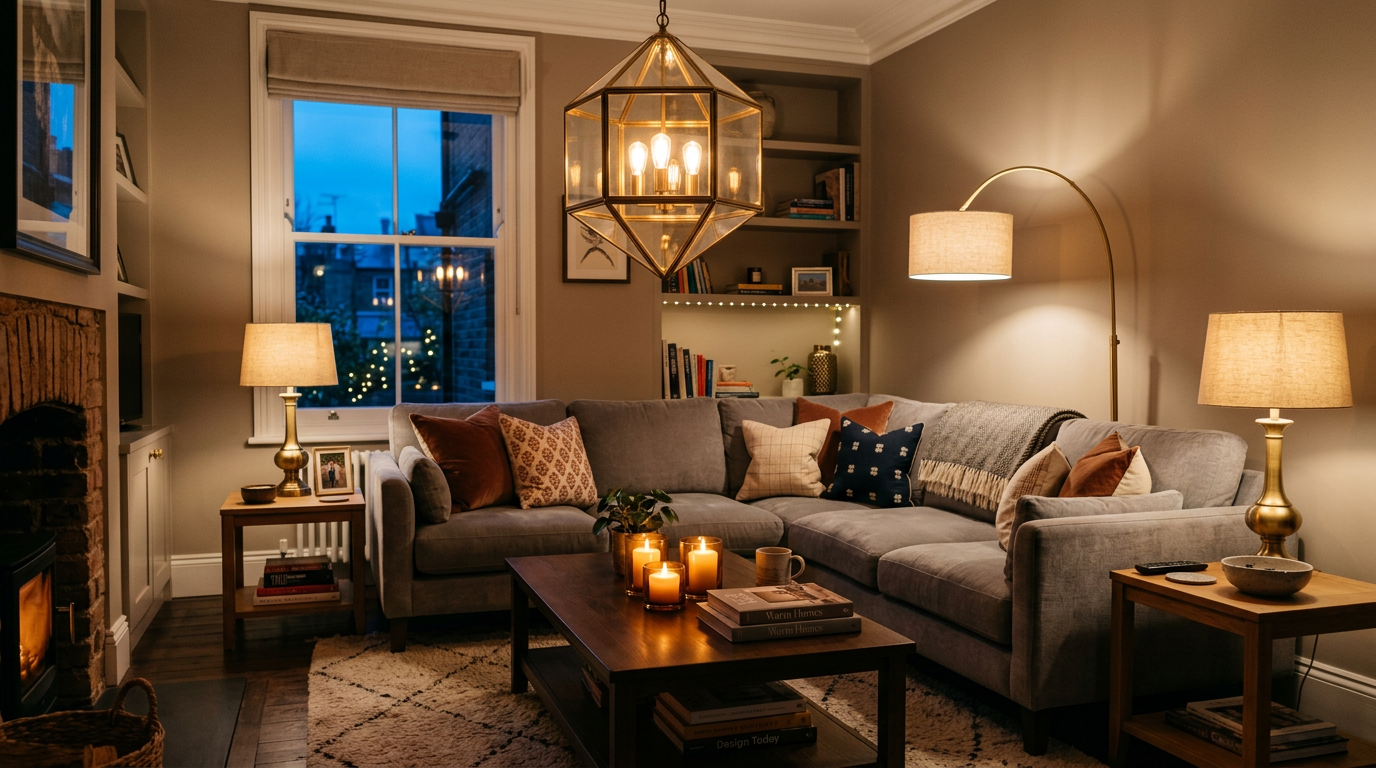
Why Lighting Makes or Breaks a Room
You can have the perfect furniture, the ideal color palette, and beautiful accessories — but with bad lighting, your living room will still feel off. Lighting controls the mood, highlights your design choices, and determines how functional your space is at every hour.
The Three Layers of Light
Professional designers build lighting plans around three distinct layers. Together, they create depth and flexibility.
Ambient Lighting
This is your room’s base layer — the general illumination that replaces or supplements daylight. Ceiling fixtures, recessed lights, and large floor lamps typically provide ambient light. The goal is even, comfortable brightness throughout the space.
Task Lighting
Focused light for specific activities: reading, working, or playing games. Table lamps beside a reading chair, a swing-arm wall lamp over a sofa, or an adjustable floor lamp all serve this purpose. Task lighting should be brighter than ambient but directed, not flooding the room.
Accent Lighting
Accent lighting adds drama and highlights design features. Picture lights over artwork, LED strips under floating shelves, uplights behind plants, or candles on a mantel all create points of visual interest and depth.
Choosing Fixtures
Ceiling Fixtures
A statement pendant or chandelier anchors the room. In rooms with standard 8-foot ceilings, flush-mount or semi-flush fixtures keep things proportional. In rooms with higher ceilings, a dramatic pendant or multi-arm chandelier adds the vertical element your space needs.
Floor Lamps
Arc floor lamps are perfect behind sofas, providing ambient and task light without a side table. Torchière-style lamps bounce light off the ceiling for diffused ambient glow. Tripod lamps add a sculptural, modern element.
Table Lamps
Placed on end tables, console tables, or shelving, table lamps provide intimate pools of light. Choose shades that complement your decor — linen for casual warmth, metal for modern edge, paper for diffused softness.
Wall Sconces
Sconces free up surface space and add architectural interest. They work beautifully flanking a fireplace, artwork, or mirror. Plug-in sconces are a great option if hardwiring isn’t feasible.
Color Temperature Matters
Light bulb color temperature, measured in Kelvin (K), dramatically affects mood:
- 2200K–2700K — warm, golden light ideal for living rooms. Creates intimacy and relaxation
- 3000K — neutral warm, good for task areas within the living room
- 3500K+ — cool, energizing light better suited to kitchens and workspaces
Keep all bulbs in your living room within the same color temperature range for visual cohesion. Mixing warm and cool light in one room feels jarring.
Dimmer Switches Are Essential
Installing dimmers is one of the highest-impact, lowest-cost upgrades you can make. Dimmers let you adjust brightness to match the time of day, activity, and mood. Morning coffee with bright light, evening movie with dimmed fixtures, dinner party with candlelight levels — all in the same room.
Placement Guidelines
- Living rooms typically need 20 lumens per square foot for ambient lighting
- Place floor lamps in dark corners to eliminate shadows and balance the room
- Position reading lamps so light falls over your shoulder, not in your eyes
- Hang pendants 7 feet from the floor minimum in walkable areas
- Space recessed lights 4-6 feet apart for even coverage
Natural Light Optimization
Don’t overlook your most important light source. Maximize natural light by keeping window treatments light and simple, using mirrors to bounce light deeper into the room, and avoiding tall furniture that blocks windows. The interplay between natural and artificial light changes your room’s character throughout the day.
Smart Lighting Considerations
Smart bulbs and switches allow you to control brightness, color temperature, and scheduling from your phone or voice assistant. You can program scenes — “Movie Night” dims everything and warms the color, “Morning” brings brightness up gradually. It’s functional luxury.
Common Lighting Mistakes
- Relying on a single ceiling fixture — this creates flat, unflattering light
- Ignoring dimmers — full-on or full-off isn’t enough range
- Mixing color temperatures — keep warm with warm
- Forgetting dark corners — unlit areas make a room feel smaller
- Over-lighting — more isn’t always better. Aim for comfortable, not clinical
Lighting and Your Decor
Your lighting fixtures are decor elements themselves. A brass arc lamp makes a mid-century statement. A rattan pendant adds bohemian texture. A minimalist paper lantern nods to Japandi style. Choose fixtures that reinforce your design aesthetic while doing their functional job.