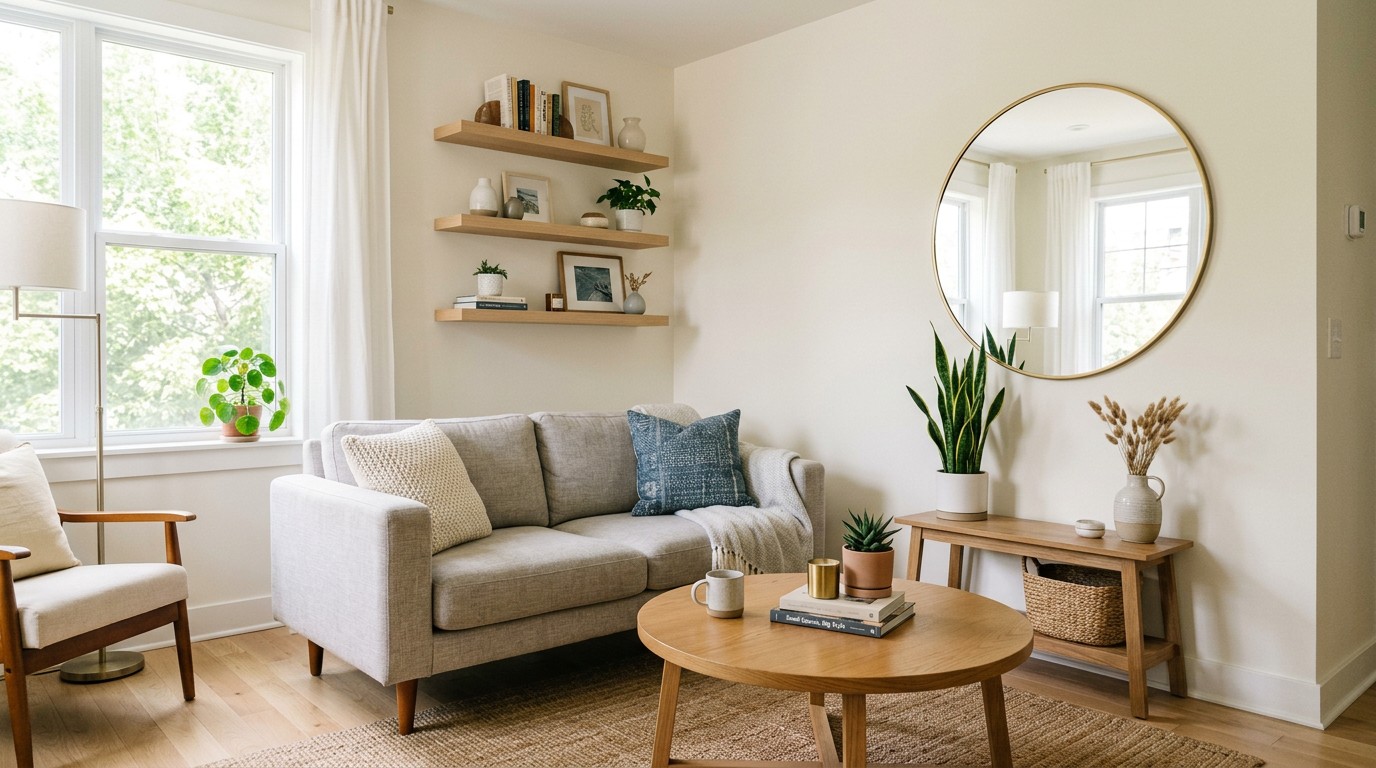
The Challenge of Small Living Room Layouts
A small living room needs to work harder than a large one. It must accommodate seating, storage, traffic flow, and possibly dining or work areas — all within limited square footage. The key isn’t buying smaller furniture; it’s choosing the right pieces and placing them strategically.
Measure Before You Move
Before rearranging or shopping, measure your room and doorways. Note window placements, outlets, and any architectural features. Sketch a rough floor plan or use a free room-planning app. Knowing your dimensions prevents costly mistakes and helps you visualize different arrangements.
Layout Strategies That Work
The L-Shape
Place your sofa along the longest wall and add an armchair or small loveseat perpendicular to it. This creates a conversational grouping while leaving the center of the room open.
The Floating Arrangement
Pull furniture a few inches away from the walls. It sounds counterintuitive in a small room, but floating furniture actually makes a space feel larger by creating a sense of depth behind pieces.
The Diagonal Angle
Positioning your sofa at a slight angle across a corner can break up a boxy room and create a more dynamic layout. This works particularly well in rooms that are nearly square.
The Dual-Purpose Layout
If your living room doubles as a dining area or home office, use furniture to define zones. A sofa back can separate the living area from a desk space. A narrow console table behind the sofa can serve as a work surface.
Choosing the Right Furniture
Scale Down, Don’t Eliminate
Choose apartment-scaled furniture rather than cutting pieces entirely. A two-seater sofa is better than no sofa. A slim armchair is better than a bulky recliner.
Look for Exposed Legs
Furniture with visible legs — sofas, chairs, tables — allows the eye to see more floor, making the room feel larger. Avoid heavy, skirted pieces that sit directly on the floor.
Pick Multitaskers
An ottoman that opens for storage, a side table that nests, a sofa bed for guests — every piece should earn its space by serving more than one purpose. Explore more ideas in our multifunctional furniture guide.
Consider Armless Pieces
Armless chairs, benches, and loveseats take up less visual and physical space while providing the same seating. A backless bench along one wall provides flexible, space-efficient seating.
Traffic Flow Is Non-Negotiable
Even in a tiny room, you need clear paths. Aim for at least 30 inches of walking space through main traffic areas. People should be able to move through the room without squeezing past furniture. If you have to climb over something to sit down, rethink the layout.
Visual Tricks That Help
Use One Large Rug
A rug that extends under all your seating unifies the space and makes it feel larger. Multiple small rugs chop up the floor and make the room feel cluttered.
Keep the Sight Lines Open
Avoid placing tall furniture in the middle of the room. Keep taller pieces like bookshelves and cabinets against the walls so you can see across the entire space.
Mirrors Expand Perception
A large mirror on one wall reflects light and creates the illusion of depth. Place it opposite a window for maximum effect. Read more about mirror strategies for small spaces.
Vertical Storage
When floor space is limited, go vertical. Floating shelves, tall narrow bookcases, and wall-mounted cabinets provide storage without consuming precious floor area.
Common Small Living Room Mistakes
- Pushing everything against the walls — this actually makes rooms feel smaller, not larger
- Too many small pieces — a few well-scaled items are better than many tiny ones
- Blocking windows — keep furniture below window sill height to maximize natural light
- Ignoring vertical space — empty walls above furniture are wasted potential
- No focal point — even small rooms need a center of attention, whether it’s art, a window view, or a fireplace
Making It Feel Bigger
Beyond furniture arrangement, a few design choices amplify the sense of space. Light wall colors, consistent flooring, and minimal window treatments all contribute. Choosing a color palette with lighter tones and keeping visual clutter to a minimum will make your small living room feel surprisingly spacious.