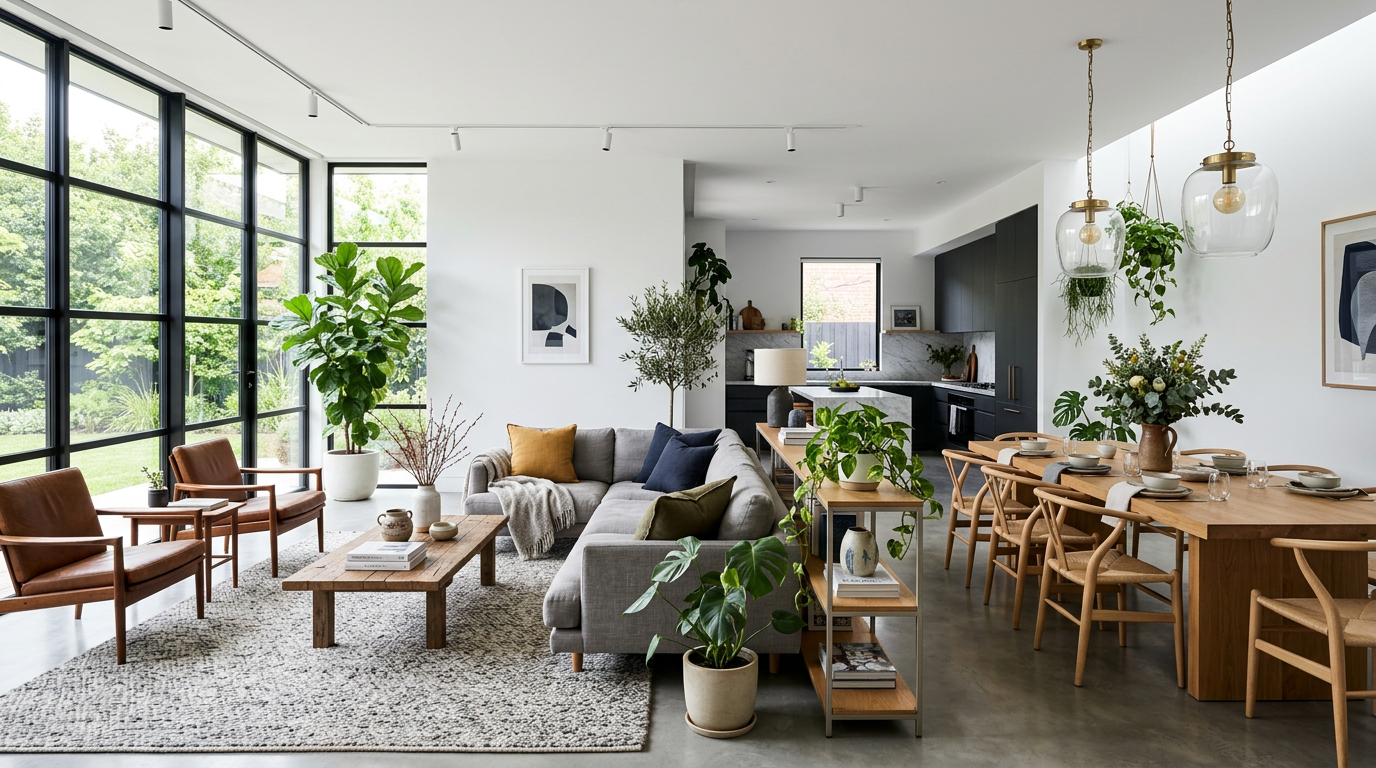
The Open Plan Challenge
Open plan living is popular for good reason — it maximizes light, creates a sense of spaciousness, and fosters togetherness. But without walls to define spaces, open plan rooms can feel like one large, undefined area. The solution is intentional zoning.
Zoning Techniques
Rugs Define Areas
The most effective zoning tool is an area rug. Place a rug under your living room furniture grouping to create a visual boundary. The rug says “this is the living room” without any walls. Choose a rug large enough that all seating furniture has at least its front legs on it.
Furniture as Dividers
The back of a sofa makes a natural divider between living and dining zones. A console table placed behind the sofa reinforces this boundary while providing storage and display space. A bookshelf oriented perpendicular to the wall can separate areas while maintaining visual connection.
Lighting Zones
Different lighting for different areas signals distinct zones. A pendant over the dining table, floor lamps in the living area, and under-cabinet lights in the kitchen create three distinct experiences within one open space. For detailed guidance, see our lighting guide.
Ceiling and Floor Transitions
If you’re renovating, consider different flooring in different zones — wood in the living area, tile in the kitchen. Ceiling treatments like a lowered section or different paint color above the dining area also define zones from above.
Color and Material Shifts
Subtle shifts in color palette between zones create visual separation. Your living area might lean into warm neutrals while the dining area introduces a cooler accent. The shift should be gentle — these spaces are still connected.
Furniture Layout for Open Spaces
Anchor Each Zone
Every zone needs a focal point. The living area anchors around the sofa grouping facing a fireplace, TV, or window. The dining area centers on the table. Each zone should feel complete on its own while contributing to the whole.
Create Circulation Paths
In open plans, traffic flow is critical. Map out the paths people naturally take between rooms and ensure no furniture blocks them. A clear path from the front door to the kitchen shouldn’t require navigating around the coffee table.
Face Furniture Inward
Arrange living room seating to face inward, creating an intimate conversation area. This is especially important in large open spaces where furniture against the walls would feel lost and disconnected. Learn more in our furniture arrangement guide.
Maintaining Visual Cohesion
Consistent Color Thread
While each zone can have its own accent colors, maintain a consistent base palette throughout the open space. If your walls are warm white, keep that consistent. If your wood tones are walnut, use walnut across all zones.
Repeating Materials
Carry materials across zones to create unity. Brass hardware in the kitchen, a brass lamp in the living area, and brass candleholders on the dining table. This repetition ties the space together.
Unified Flooring
One continuous flooring material throughout the space is the simplest way to maintain cohesion. If you do transition materials, keep the color tone consistent.
Scale Considerations
Open plan rooms are typically large, which changes how you select furniture and decor. Small accessories disappear. Artwork needs to be scaled up. Furniture groupings need to be substantial enough to hold their own in the expanse. A single small sofa in a large open plan looks lost — you need a sectional or a sofa-plus-chairs grouping.
Acoustic Solutions
Open plans are noisy. Sound travels freely without walls to absorb it. Combat this with:
- Rugs on hard floors
- Upholstered furniture instead of hard chairs
- Curtains on windows
- Acoustic panels disguised as art
- Bookshelves filled with books (excellent sound absorbers)
Making It Feel Cozy
The biggest complaint about open plans is that they feel impersonal. Counter this by creating cozy pockets within the larger space. A reading nook by a window, a deeply cushioned sofa grouping, curtains that can be drawn for intimacy — these human-scaled moments within the grand space make it feel like home.