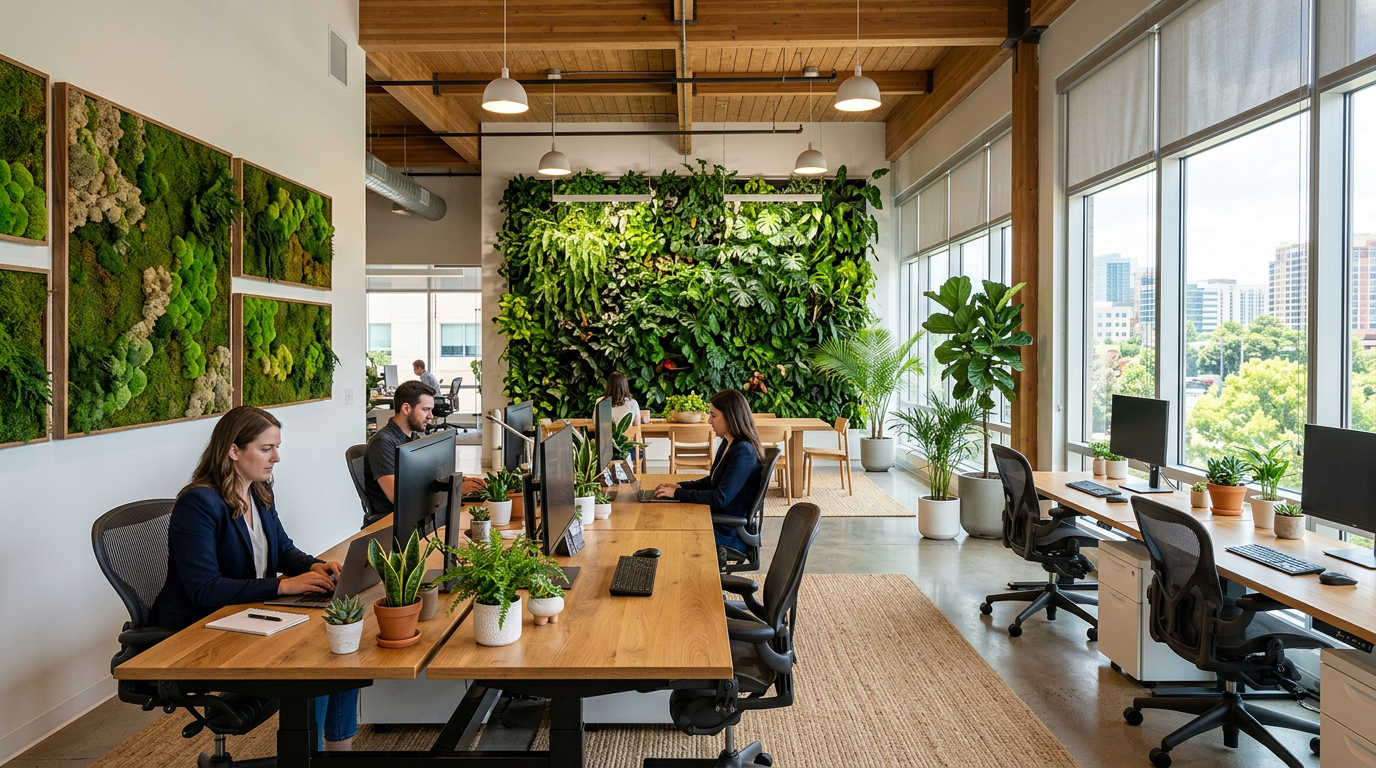
The Science Behind Biophilic Design
Humans evolved in nature. Our brains are wired to respond positively to natural elements — plants, water, sunlight, natural materials, and organic forms. Biophilic office design harnesses this connection to create workplaces where people feel better, focus better, and produce better work.
Research from multiple universities shows biophilic offices deliver 15% higher creativity, 6% higher productivity, and 15% greater overall wellbeing compared to conventional offices.
The Three Pillars of Biophilic Design
Direct Nature
Actual natural elements in the office: live plants, water features, natural light, fresh air, and even animal life (aquariums).
Indirect Nature
Representations of nature: natural materials (wood, stone, leather), nature photography, botanical wallpaper, organic shapes, and earth-toned color palettes.
Spatial Design
Layouts that mimic natural environments: prospect (open views), refuge (enclosed cozy spaces), variety (different environments within one office), and mystery (partial views that invite exploration).
Plants in the Office
Floor Plants
Large plants like fiddle leaf figs, rubber plants, and bird of paradise trees create dramatic green focal points. Place them in corners, beside entrances, and as natural space dividers.
Desk Plants
Smaller plants like pothos, snake plants, and succulents bring nature to individual workstations. Provide plant-friendly conditions and encourage employees to care for desk plants.
Living Walls
Vertical gardens — either real or preserved moss — make a dramatic statement in lobbies, meeting rooms, and social areas. They purify air, reduce noise, and create a striking visual. Professional maintenance systems make upkeep manageable.
Planter Partitions
Large planters with tall grasses or bamboo serve as natural space dividers in open offices. They provide visual privacy, acoustic absorption, and biological air filtration simultaneously.
Natural Materials
Wood
Exposed wood surfaces — desktops, paneling, shelving, flooring — bring warmth and organic texture. Studies show that visible wood in interiors reduces stress and blood pressure. Choose sustainably sourced materials.
Stone
A stone feature wall, a marble reception desk, or stone-look tiles connect the office to the geological world. Natural stone ages beautifully and communicates permanence.
Natural Textiles
Wool carpet, linen curtains, cotton upholstery, and jute rugs add organic texture that synthetic materials can’t replicate. They feel different, sound different, and age differently.
Natural Light Optimization
Maximize Windows
Position workstations within 25 feet of windows when possible. Employees with daylight access report better sleep quality, fewer headaches, and higher job satisfaction.
Light Shelves
Reflective horizontal shelves mounted at window height bounce daylight deeper into the space, extending the benefit of natural light to interior workstations.
Circadian Lighting
When natural light isn’t available, tunable LED systems that shift from cool morning light to warm evening light support natural circadian rhythms.
Water Elements
A small fountain, a water wall, or even a tabletop water feature in a reception or social area introduces the calming sound and visual of water. The psychological effect is measurable — water sounds reduce stress and improve focus.
Organic Forms
Furniture
Curved desks, organic-shaped tables, and flowing seating arrangements feel more natural than rigid grids. Soft curves and irregular forms echo the patterns found in nature.
Architecture
Arched doorways, curved walls, and organic ceiling details break the monotony of rectangular office geometry.
Patterns
Fractal patterns — the self-repeating patterns found in ferns, rivers, and coastlines — are deeply calming to the human brain. Incorporate them through art, textile patterns, and architectural details.
Implementation Strategy
Start with the highest-impact, lowest-cost changes: add plants, maximize natural light, and introduce natural materials in new furniture purchases. Build toward more ambitious elements like living walls and water features as budget allows. Every incremental step toward biophilic design improves the workplace.