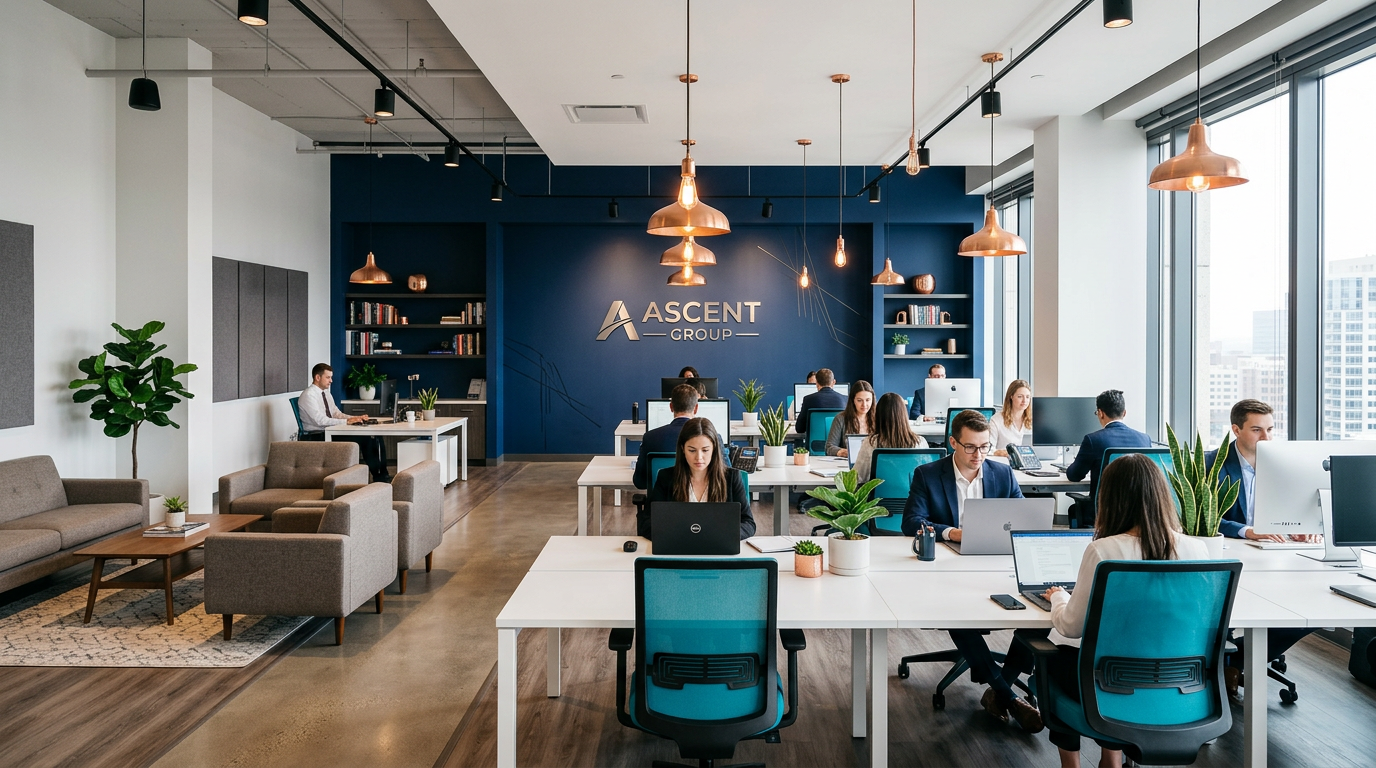
Color Drives Office Performance
Corporate environments have moved far beyond beige cubicles. Research shows that office color significantly impacts employee productivity, creativity, error rates, and satisfaction. Strategic color choices are a low-cost, high-impact investment in your team’s performance.
The Science of Office Color
Blue-toned environments reduce heart rate and improve analytical focus. Green environments reduce eye fatigue and promote creative thinking. Yellow environments boost optimism and energy. Red environments increase alertness for short-duration tasks but cause fatigue over extended periods.
The key isn’t choosing one color — it’s matching colors to activities in different zones of your office.
Zone-Based Color Strategy
Focus Areas — Blues and Greens
Where employees do concentrated individual work, soft blues and greens support sustained attention. These colors lower stress and create a calm environment conducive to deep work. Think accounting departments, engineering spaces, and writing areas.
Creative Areas — Yellow and Orange Accents
Brainstorming rooms, design studios, and innovation labs benefit from warm, stimulating accent colors. Use them on feature walls or in furniture, not as the dominant wall color.
Social Areas — Warm Neutrals and Earth Tones
Break rooms, lounges, and cafeterias should feel inviting and relaxing. Warm neutrals, wood tones, and earth colors create spaces where people recharge. See our break room design guide.
Executive Areas — Sophisticated Neutrals
Board rooms and executive offices typically benefit from deeper, sophisticated palettes — charcoal, navy, rich wood tones. These colors communicate authority and thoughtfulness without being distracting.
Popular Corporate Color Palettes
Modern Professional
Soft gray walls, white trim, navy blue accents, and natural wood. Clean, contemporary, and universally professional. Works for law, finance, consulting, and technology.
Creative Energy
White walls with bold accent walls in emerald green, terracotta, or deep yellow. Mixed materials and eclectic art. Works for agencies, media companies, and startups.
Warm and Welcoming
Cream walls, sage green accents, warm wood furniture, and copper or brass fixtures. Works for healthcare, hospitality, education, and community organizations.
Tech-Forward
Cool white walls, black and charcoal furniture, neon or vibrant accent colors in small doses. Works for technology companies and innovation-focused organizations.
Implementing Color Changes
Start With Accent Walls
You don’t need to repaint the entire office. A single accent wall in each area adds color impact without overwhelming. This is also cheaper and faster to update when trends or brand colors change.
Use Furniture and Textiles
Office chairs, acoustic panels, rugs, and accessories are all vehicles for color. These are easier to change than paint and allow more experimentation.
Brand Integration
Your brand colors belong in the office, but not on every surface. Use them strategically — in reception, meeting rooms, and social areas — rather than saturating the environment. Too much brand color feels like living inside a logo.
Colors to Avoid
- Stark white everywhere — feels clinical and causes glare
- Dark colors on all walls — feels oppressive in offices with limited windows
- Too many colors competing — creates visual chaos rather than energy
- Trendy colors that date quickly — choose a timeless base with trend-friendly accents
- Ignoring natural light — colors look dramatically different in windowless versus windowed rooms
Employee Input Matters
When possible, involve employees in color decisions. Their daily experience of the space matters more than designer preference. Simple surveys about color preferences can increase satisfaction with the final result and give employees a sense of ownership over their environment.