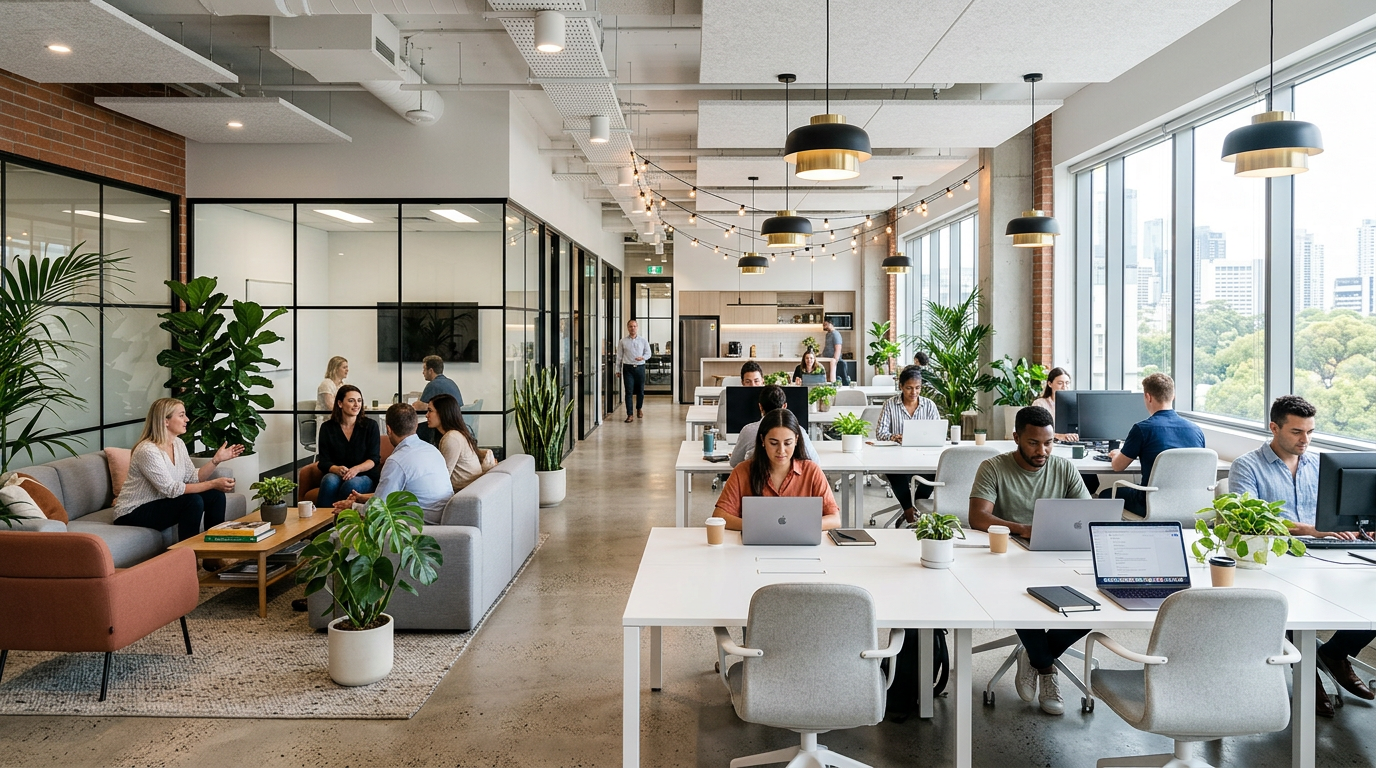
The Open Office Paradox
Open offices were designed to encourage collaboration, but without thoughtful design, they often produce the opposite — distraction, noise fatigue, and a sense of being watched. The solution isn’t walls; it’s intelligent design that provides variety within openness.
Zoning an Open Office
Activity-Based Zones
Divide your open office into zones based on work type: focused work areas with acoustic shielding, collaboration zones with shared tables, social areas with comfortable seating, and quiet phone booths for calls.
Visual Differentiation
Use different flooring, rug colors, lighting styles, or ceiling treatments to signal zone transitions. People naturally adjust their behavior when the environment signals a change in purpose.
Plant Dividers
Tall plants on rolling planters create natural, flexible partitions that purify air, reduce noise, and look beautiful. They’re softer than screens and more organic than cubicle walls.
Managing Noise
Acoustic Panels
Wall-mounted and ceiling-suspended acoustic panels dramatically reduce reverberation. Modern acoustic panels come in attractive colors, patterns, and even custom artwork prints. They’re functional decor.
Sound Masking
White noise or pink noise systems provide a consistent ambient sound that masks conversation. It’s surprisingly effective — speech becomes unintelligible at a shorter distance, giving everyone more privacy.
Soft Materials
Carpet, upholstered furniture, curtains, and fabric acoustic panels all absorb sound. An open office with all hard surfaces is an echo chamber. Soft materials are the antidote.
Personal Space in Shared Environments
Individual Desk Styling
Allow employees to personalize their immediate workspace within guidelines. A plant, a photo, a desk accessory — these small personal touches reduce the anonymous feeling of identical workstations.
Storage Solutions
Pedestal drawers, personal lockers, or under-desk cabinets give each person a private space for personal items. The security of having a lockable space matters psychologically.
Privacy Screens
Desk-mounted screens, even small ones, provide visual shielding that helps with focus. Felt screens in brand colors can look intentional rather than isolating.
Biophilic Design Elements
Bringing nature into the open office through plants, natural materials, daylight optimization, and nature-inspired patterns reduces stress and improves wellbeing. Large planters, living walls, and natural wood surfaces transform sterile offices into humane environments. See our dedicated article on biophilic office design.
Furniture Choices
Adjustable Desks
Sit-stand desks give employees control over their posture and add visual variety to the space. When some people are standing and some sitting, the office feels more dynamic.
Variety of Seating
Beyond desk chairs, provide lounge chairs, bench seating, standing tables, and soft seating areas. Different postures support different types of thinking.
Mobile Furniture
Tables on casters, lightweight chairs, and mobile whiteboards let teams reconfigure spaces for different needs. Flexibility is the defining feature of well-designed open offices.
Color Strategy
Base Neutrals
Keep walls and large surfaces neutral — warm whites, light grays, natural wood. This prevents visual overwhelm in a space where many people and objects already create complexity.
Accent Colors
Introduce color through furniture, acoustic panels, artwork, and accessories. These can follow your brand palette or simply add energy. Zoning different areas with different accent colors helps with wayfinding.
Lighting
Daylight Priority
Position workstations to maximize access to natural light. Employees near windows report higher satisfaction. If some areas are far from windows, use full-spectrum lighting to compensate.
Task Lighting
Provide individual desk lamps so employees can control their immediate lighting. Some people prefer brighter light; others work better in dimmer conditions. Personal control improves comfort.
Avoid Uniform Overhead
Banks of identical fluorescent panels create a flat, institutional atmosphere. Vary your lighting — pendants over collaboration areas, recessed lighting at desks, accent lighting on art and plants — for a more dynamic, inviting environment.