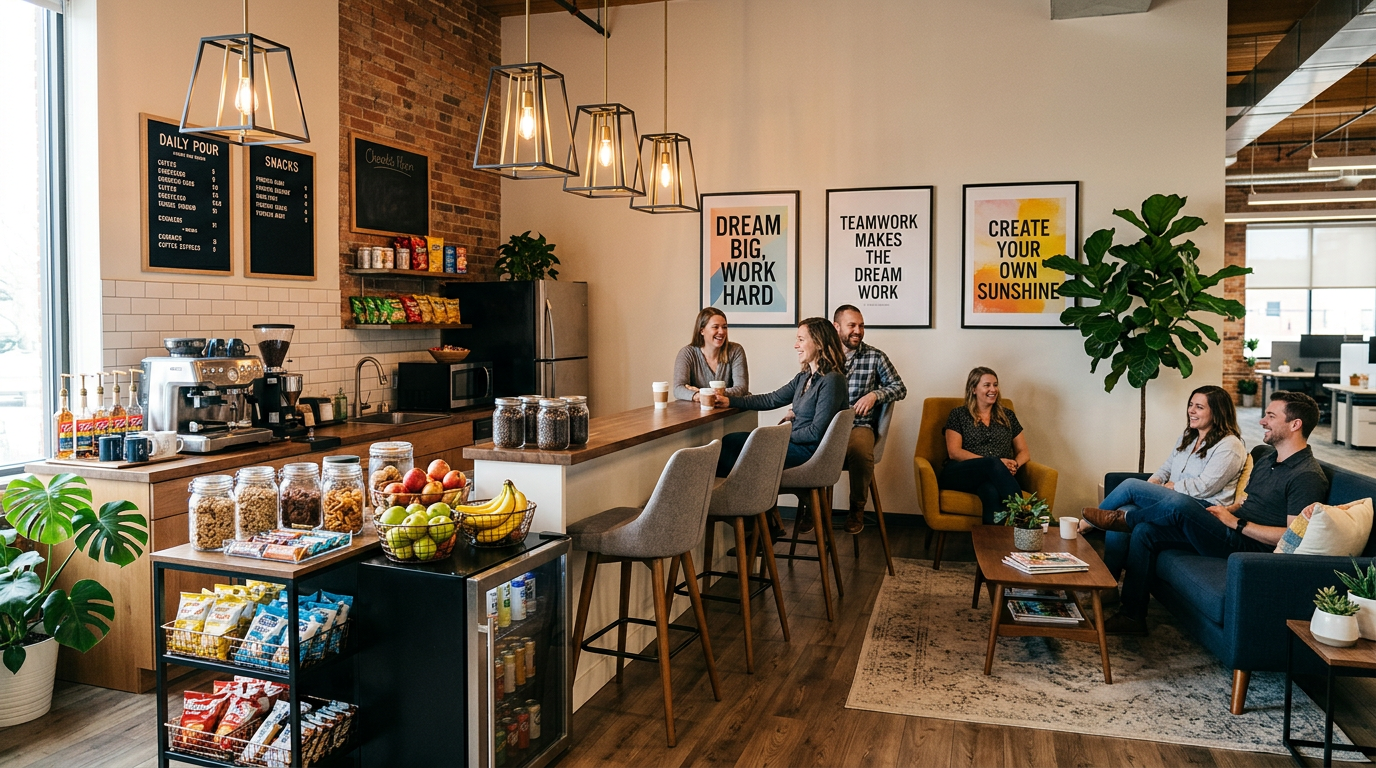
Break Rooms Should Actually Provide a Break
Most office break rooms are afterthoughts — a microwave, a fridge, and fluorescent lights. But the break room is where your team recharges, socializes, and builds the informal relationships that make collaboration work. A well-designed break area is an investment in team performance.
Design That Says “Relax”
Warm Materials
Wood tables, upholstered seating, and warm lighting signal that this isn’t a work zone. The break room should feel like a cafe or a friend’s kitchen — not an extension of the cubicle farm.
Comfortable Seating Variety
Mix dining-height tables with lower lounge seating. Some people want to eat at a table; others want to sink into a sofa with their coffee. Providing both accommodates different relaxation styles.
Distinct From Work Areas
The break room should look and feel different from the rest of the office. Different flooring, paint colors, lighting, and furniture styles create a psychological transition between work mode and rest mode.
The Kitchen Area
Quality Appliances
A good coffee machine, a clean microwave, a reliable fridge, and a toaster oven are the basics. If budget allows, a pour-over coffee station, a filtered water dispenser, and a good blender signal that the company cares about daily comforts.
Organized Storage
Open shelving for mugs and plates, closed cabinets for supplies, and labeled containers keep shared kitchens from descending into chaos. Attractive dishes in matching sets elevate the experience.
Clean Surfaces
Easy-to-clean countertops, a quality soap dispenser, and real kitchen towels (not industrial paper roll) make the kitchen feel like a kitchen rather than a utility room.
Lounge Zone
Soft Seating
Sofas, armchairs, and poufs in warm fabrics create genuine relaxation. Position them for conversation, not lined up against a wall like a waiting room.
Warm Lighting
Floor lamps, pendant lights, and table lamps replace or supplement overhead fixtures. Warm color temperatures (2700-3000K) create a cafe atmosphere. The contrast with typical office lighting makes the break room feel special.
Reading Material and Entertainment
Current magazines, a bookshelf, or a curated selection of board games gives people something to engage with during breaks. Some offices add a game console, ping pong table, or dart board — all legitimate break activities.
Color and Atmosphere
Break rooms benefit from warmer, more saturated colors than work areas. Terra cotta, warm yellows, sage greens, and rich blues create an inviting atmosphere. Accent walls in bold colors work well here even if they’d be distracting in a workspace.
Plants and Nature
The break room is an ideal location for biophilic elements. Larger plants that wouldn’t fit on desks, a herb garden on the kitchen windowsill, or a small water feature. These natural elements support the recharging function of the break.
Acoustic Separation
Break rooms should be lively without disturbing adjacent work areas. Sound insulation between the break room and work zones, acoustic panels within the break room to manage internal noise levels, and a solid door all help.
Practical Details
- Trash and recycling — multiple well-labeled bins in convenient locations
- Cleaning schedule — posted and enforced, or professional cleaning daily
- Stocking system — designated responsibility for supplies, coffee, and consumables
- Temperature — comfortable year-round, ideally with independent climate control
- Wi-Fi — because even on break, people want their phones to work
Making It Worth Visiting
The ultimate test of a break room is whether people choose to use it. If employees eat at their desks instead, the break room has failed its purpose. Make it a place people genuinely want to spend time — and then make it easy for them to do so by locating it conveniently and encouraging break culture.