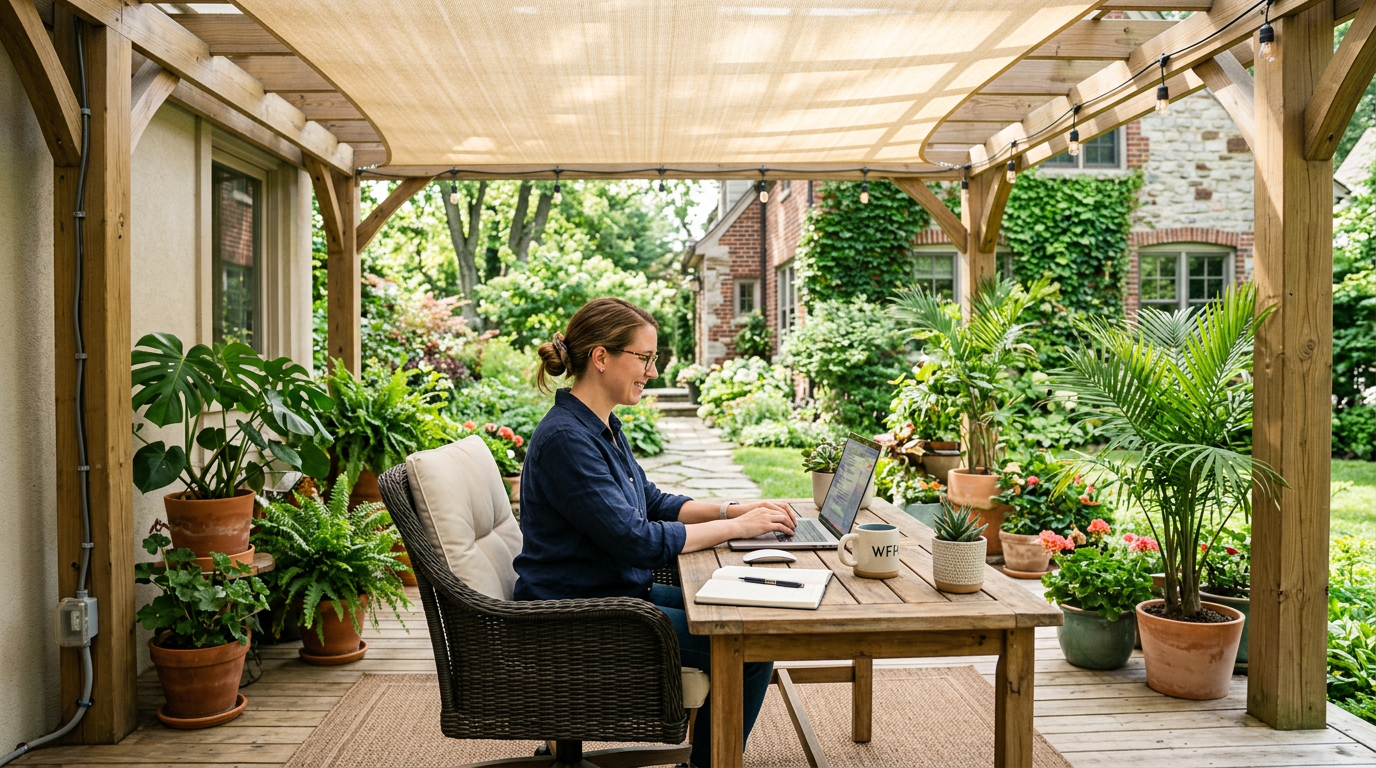
The Case for Working Outside
Fresh air, natural light, birdsong, and greenery — the outdoor environment offers benefits that no indoor office can match. Studies show that nature exposure improves mood, reduces stress, and boosts creative thinking. If you work remotely, an outdoor workspace can be your competitive advantage.
Practical Requirements
Screen Visibility
Glare is the biggest challenge of outdoor computing. Position your screen in shade and perpendicular to the sun’s path. Anti-glare screen filters help. Some days are simply too bright — have an indoor backup.
Connectivity
Ensure your Wi-Fi reaches your outdoor space. A mesh Wi-Fi system, a range extender, or even a mobile hotspot provides reliable connectivity. Test signal strength before committing to a location.
Power
An outdoor outlet, a heavy-duty extension cord, or a portable power station keeps your devices charged. Solar-powered chargers supplement for phone and tablet use.
Shade
Working in direct sun is uncomfortable and makes screens unreadable. A patio umbrella, pergola, shade sail, or position under a tree provides necessary coverage.
Furniture Choices
The Outdoor Desk
A sturdy outdoor table at the right height works. Look for tables at standard desk height (28-30 inches) or bring a portable desk riser. Weather-resistant materials — teak, aluminum, or treated wood — withstand the elements.
Seating
If you’re working for extended periods, comfort matters. A cushioned outdoor chair with back support beats a hard garden chair. For shorter sessions, even a patio lounge chair with a lap desk works. See our ergonomic design guide for posture tips that apply outdoors too.
A Portable Setup
A folding table and a comfortable folding chair let you set up and break down your outdoor office in minutes. This flexibility is ideal for balconies and shared spaces.
Creating the Workspace
Define a Zone
Don’t just plop a laptop on any available surface. Create an intentional outdoor office zone with a dedicated table, your chair, and perhaps a small rug underneath. The defined space helps your brain shift into work mode.
Wind Management
Wind wreaks havoc on papers and light items. Use paperweights, digital documents, and secured accessories. Position your workspace in a wind-sheltered spot.
Insect Protection
Citronella candles, personal repellent, a fan (bugs can’t fly in moving air), and avoiding sweet drinks reduce bug encounters during work time.
The Seasonal Outdoor Office
Spring and Fall
The ideal seasons for outdoor work. Moderate temperatures, soft light, and comfortable conditions. Layer clothing and keep a blanket nearby for cool mornings.
Summer
Early morning and late afternoon are best — midday heat and glare are challenging. Heavy shade, a fan, and cold water are essentials.
Winter
In mild climates, outdoor work continues year-round. A sunny, sheltered spot with a warm drink works on cool winter days.
Styling Your Outdoor Office
Even a temporary workspace benefits from intentionality. A plant on the table, a proper desk organizer, a quality water bottle — these touches make the space feel like a real office rather than a picnic table. They also help you take your outdoor work time seriously.
The Hybrid Approach
The most practical setup is a primary indoor home office with the option to work outside when conditions are right. Keep a portable kit ready: laptop, charger, sunglasses, a cushion, and a power bank. When the weather calls, grab the kit and go.