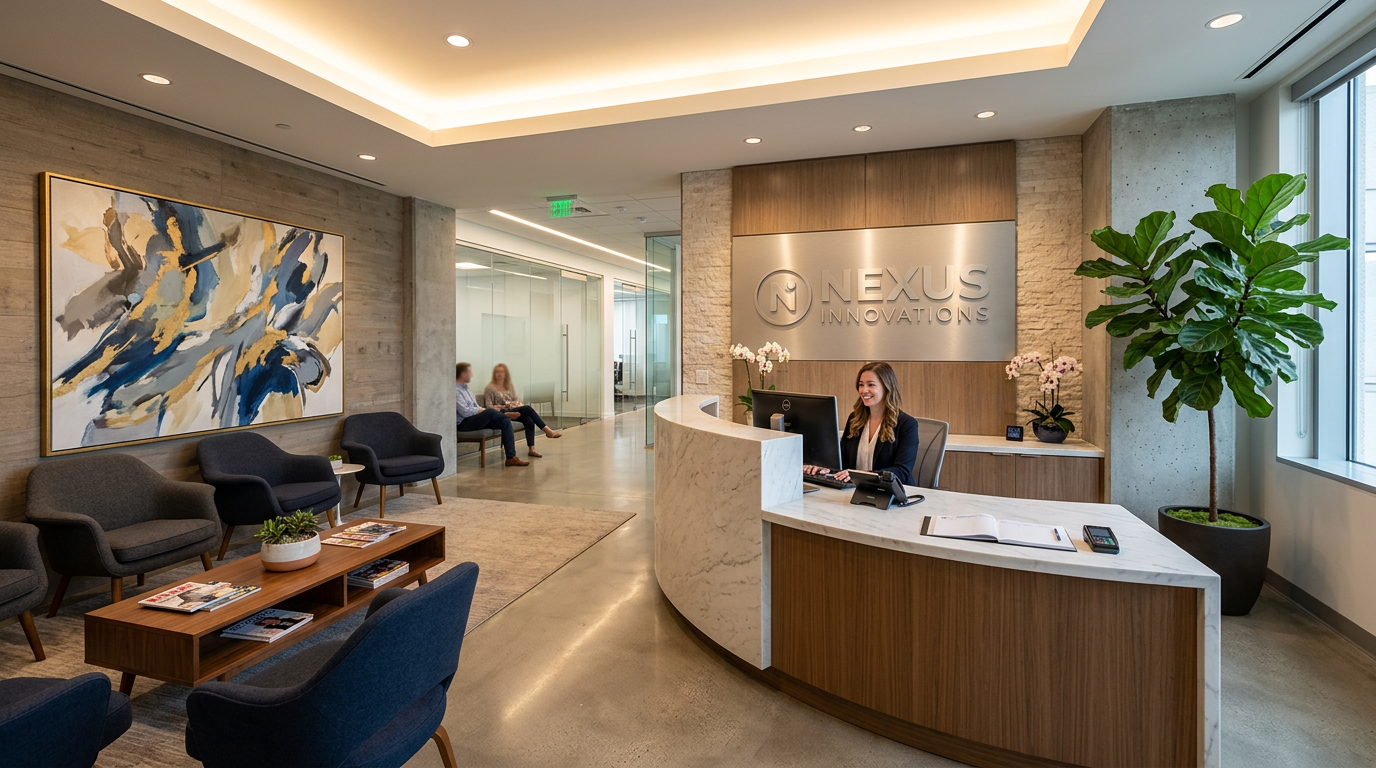
First Impressions Start at Reception
Your reception area is the first physical experience of your brand. Visitors form opinions within seconds of walking in. A well-designed reception communicates professionalism, values, and personality before a single word is spoken.
Essential Elements
The Reception Desk
The desk anchors the space. It should be proportional to the room — large enough to be authoritative but not so massive it overwhelms. Material choices signal brand identity: marble for luxury, wood for warmth, metal for tech-forward, concrete for creative edge.
Seating
Comfortable, stylish guest seating shows you value visitors’ time. Choose pieces that reflect your brand — mid-century chairs for a design firm, clean modern sofas for a tech company, leather club chairs for a law office. Ensure enough seating for typical visitor volume.
Signage and Branding
Your logo should be visible without being aggressive. Options include a backlit logo on the wall behind reception, dimensional letters in your brand material (wood, metal, acrylic), or a subtle etched-glass panel. The style should match your brand’s personality.
Design Approaches
The Warm Welcome
Natural wood, warm lighting, plants, and comfortable textiles create a reception that feels like a living room. This approach works for hospitality, healthcare, and any brand that wants to communicate care and approachability.
The Sleek Statement
Polished surfaces, dramatic lighting, minimal furniture, and bold art create a high-impact entrance. Technology companies, fashion brands, and architecture firms often choose this direction. Every element is carefully edited for maximum effect.
The Creative Studio
Exposed materials, curated art collections, unusual furniture, and visible creative work on display. This approach suits agencies, design studios, and creative businesses. The reception doubles as a portfolio.
The Heritage Professional
Rich wood paneling, classic furniture, traditional art, and quality materials communicate established authority. Law firms, financial institutions, and consulting practices often benefit from this timeless approach.
Lighting the Reception
Reception lighting should be welcoming, not clinical. Combine ambient lighting (recessed or architectural) with accent lighting (spotlights on art or signage) and warm table or floor lamps in seating areas. Avoid harsh fluorescent overhead panels — they undermine even the best design.
Practical Considerations
Wayfinding
Visitors should know immediately where to go. Clear sight lines to the reception desk, intuitive signage to meeting rooms and restrooms, and helpful reception staff. Good design is also good navigation.
Acoustic Comfort
Receptions can be echoey if all surfaces are hard. Acoustic panels (disguised as art), upholstered furniture, rugs, and curtains all absorb sound. Visitors should be able to have a conversation at the desk without the entire lobby hearing.
Technology Integration
Visitor check-in systems, digital displays, and charging stations are expected in modern offices. Integrate them cleanly — a tablet on a sleek stand, not a laptop on a folding table.
Accessibility
Ensure your reception is accessible. A desk section at wheelchair height, clear pathways, appropriate signage, and comfortable seating options for all abilities are both legally required and morally right.
The Waiting Experience
Don’t underestimate the time visitors spend waiting. Provide quality reading material (relevant publications, your company magazine), a beverage station (water at minimum, coffee or tea ideally), Wi-Fi access information, and perhaps a digital display showing company work or news.
Seasonal Updates
Rotate decorative elements with the seasons — fresh flowers, seasonal art, or holiday touches — to keep the reception feeling current and cared for. A reception that never changes can feel neglected over time. For seasonal ideas, see our seasonal decor guide.
Budget Allocation
If budget is limited, prioritize: first the seating (visitor comfort), then lighting (atmosphere), then the desk (first visual impact), then art and accessories. Visitors feel comfort before they notice expensive finishes.