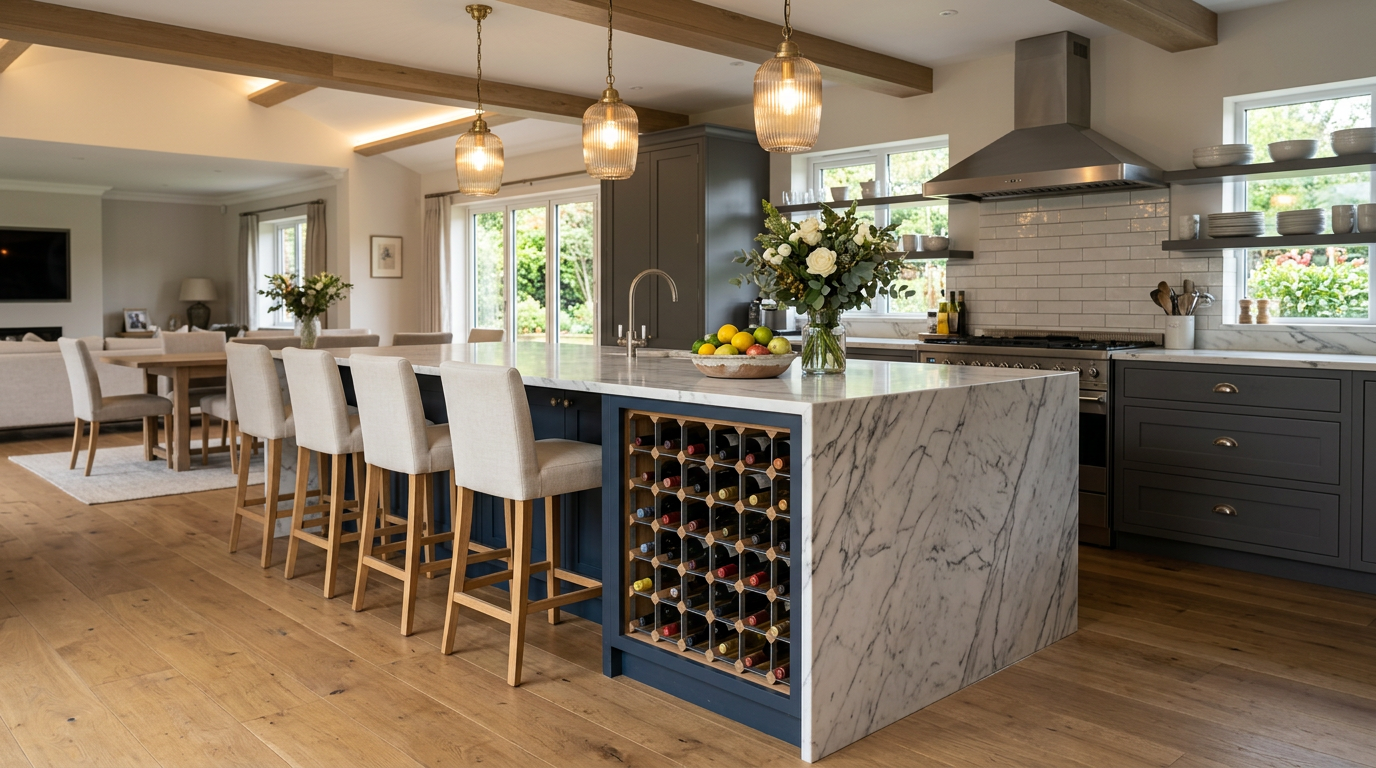
Your Island Is the Kitchen’s Focal Point
A kitchen island is prime visual and functional real estate. It’s where guests gather, where meals are prepped, and often the first thing people see when entering the kitchen. Style it to be as beautiful as it is useful.
Countertop Styling
The Rule of Restraint
An island’s primary job is providing workspace. Keep most of the surface clear. A styled vignette on one end, functional items near the sink or stove, and the rest open for cooking and gathering.
The Styled End
At one end or corner, create a small vignette: a cutting board leaning against the backsplash, a bowl of seasonal fruit, and a small potted herb. Or a tray holding oils, salt, and a pepper mill. This says “someone cooks here and cares about it.”
Functional Beauty
Choose everyday items that look good enough to display. A beautiful olive oil bottle, a quality salt cellar, a wooden utensil crock. When your tools are attractive, leaving them out is styling, not mess.
Pendant Lighting
Pendant lights over the island are a defining design choice. Two or three pendants in a line, centered over the island’s length, provide task lighting and visual anchoring.
Sizing
Pendants should be proportional to the island. For standard islands, pendants 12-18 inches in diameter work well. They should hang 30-36 inches above the countertop.
Style
Your pendant choice sets the kitchen’s tone. Glass globes for modern clean lines, woven rattan for boho warmth, industrial metal for urban edge, crystal for glamour. They’re the kitchen’s jewelry.
Seating
Counter-Height vs. Bar-Height
Counter-height stools (24 inches) suit standard 36-inch counters. Bar-height stools (30 inches) suit 42-inch counters. Measure before buying.
Style Options
Backless stools tuck under the counter cleanly. Low-back stools offer support while maintaining sightlines. Fully upholstered stools add comfort for long meals and conversations.
Spacing
Allow 24-28 inches between stool centers for comfortable seating. Don’t force an extra stool where it doesn’t fit — crowded seating is uncomfortable for everyone.
Island Color and Material
Contrasting the Kitchen
An island in a different color or material than the surrounding cabinets creates a furniture-like quality. White kitchen with a navy island. Gray cabinets with a warm wood island. This contrast makes the island a deliberate design statement.
Matching for Cohesion
If contrast isn’t your style, matching the island to the perimeter cabinets creates seamless unity. Vary through hardware, a different countertop material, or the pendant lighting instead.
Practical Features Worth Having
- Outlets — built into the island side for appliances and phone charging
- Towel bar — mounted on the end for easy access
- Storage — shelves, drawers, or wine storage on the non-seating side
- Prep sink — a small secondary sink if plumbing allows
- Cookbook shelf — a narrow shelf on the working side for propping open recipes
Seasonal Updates
Change your island’s countertop display with the seasons. A bowl of citrus in summer, apples and pears in autumn, evergreen sprigs in winter, fresh herbs in spring. These small updates keep the kitchen feeling alive and responsive to the calendar.