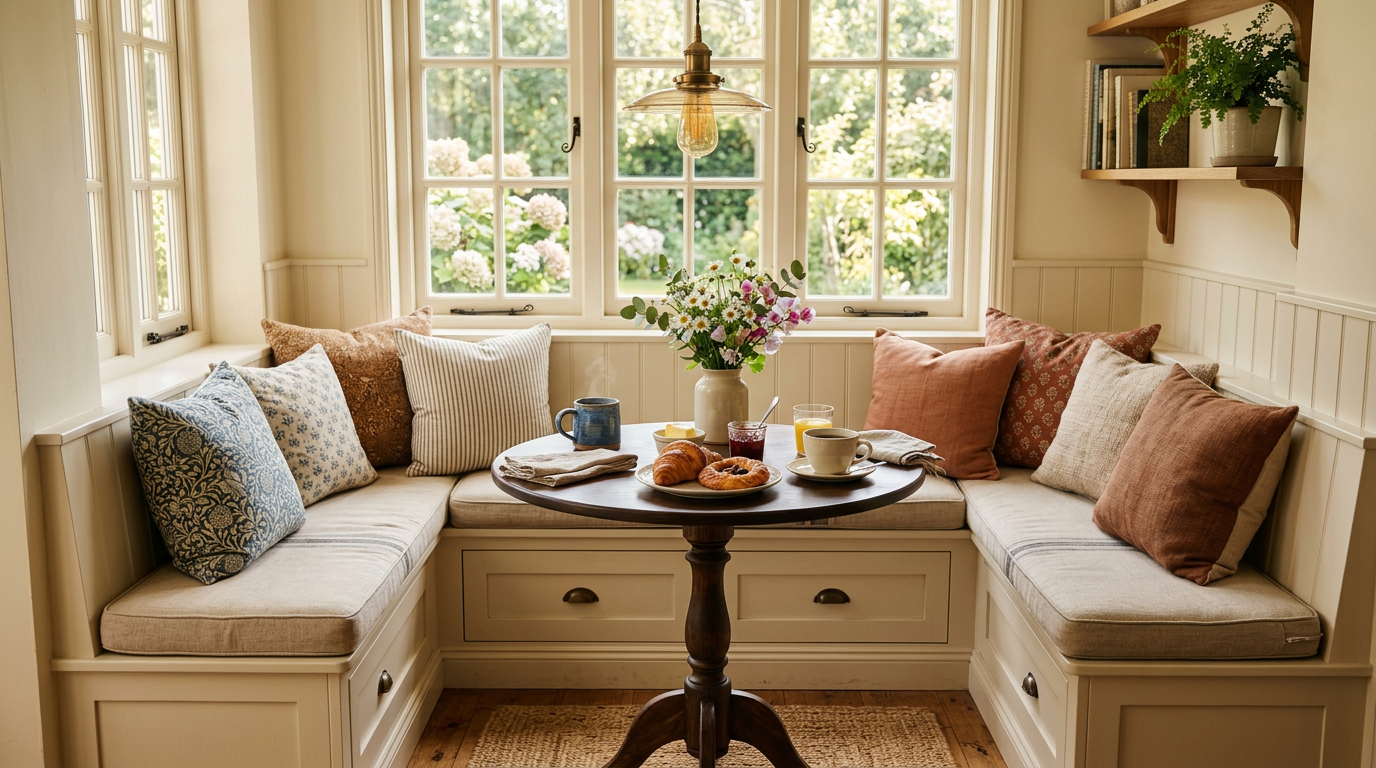
The Case for a Breakfast Nook
A breakfast nook provides something a formal dining table doesn’t — an intimate, cozy spot that invites you to linger over coffee, read the paper, or have a quick weeknight dinner. It uses space efficiently (often fitting into a kitchen corner that would otherwise be empty) and becomes one of the most-used areas in the house.
Built-In Banquette Options
L-Shaped Banquette
Two benches meeting in a corner with a table positioned against them. This maximizes seating in minimal space and creates an enveloping, booth-like experience. Add cushions for comfort.
U-Shaped Banquette
Three sides of bench seating surrounding a table. This configuration fits the most people in the least space. It’s ideal for families and for corners with windows on two sides.
Single Bench with Chairs
A bench along the wall with chairs opposite. This is the most flexible option — the bench seats extra guests when needed, and the chairs can be pulled out for easy access.
Freestanding Options
If built-ins aren’t possible (rental, budget, or preference), create a nook with freestanding furniture. A small round table with two to four chairs positioned in a kitchen corner achieves a similar effect. Add a rug underneath to define the area.
Comfort Is Non-Negotiable
Seat Depth and Height
Built-in bench seats should be 17-18 inches high and 18-20 inches deep. Deeper seats (with back cushions) feel more lounge-like. Shallower seats are more upright and practical for eating.
Cushions
Seat cushions in a durable, washable fabric turn a hard bench into comfortable seating. Back cushions or pillows against the wall add comfort for lingering. Choose fabrics that can handle spills — performance fabrics, outdoor-rated textiles, or cotton canvas with removable covers.
Back Support
A bench with no backrest works for quick meals but not for lingering. Add a cushioned backrest, position the bench against a wall for leaning, or install a low wainscot behind the bench that provides some support.
Lighting the Nook
A pendant light or small chandelier centered over the table makes the nook feel like its own room within the kitchen. Wall sconces flanking a window or a recessed light above also work. Warm, dimmable light sets the right mood.
Storage Opportunities
Built-in banquettes offer hidden storage under the seat. Lift-up seats or pull-out drawers provide space for table linens, cookbooks, games, or kitchen overflow. This turns wasted dead space into useful storage.
Styling Your Nook
The Table
A round or small rectangular table proportional to the nook. Leave enough clearance for comfortable seating and easy movement (at least 12 inches between the bench back and table edge).
The Window
If your nook includes a window (the ideal), keep treatments simple — a Roman blind, a sheer curtain, or nothing at all. The natural light is a major part of the nook’s appeal.
Decor
A small vase of flowers, a few books, a plant on the windowsill. Keep it minimal and functional. The nook should be inviting, not precious.
Making It Multi-Functional
A breakfast nook naturally doubles as a homework station, craft area, or work-from-home spot. The contained, cozy nature of a nook actually promotes focus. Just clear the table after each use so it’s always ready for the next meal.