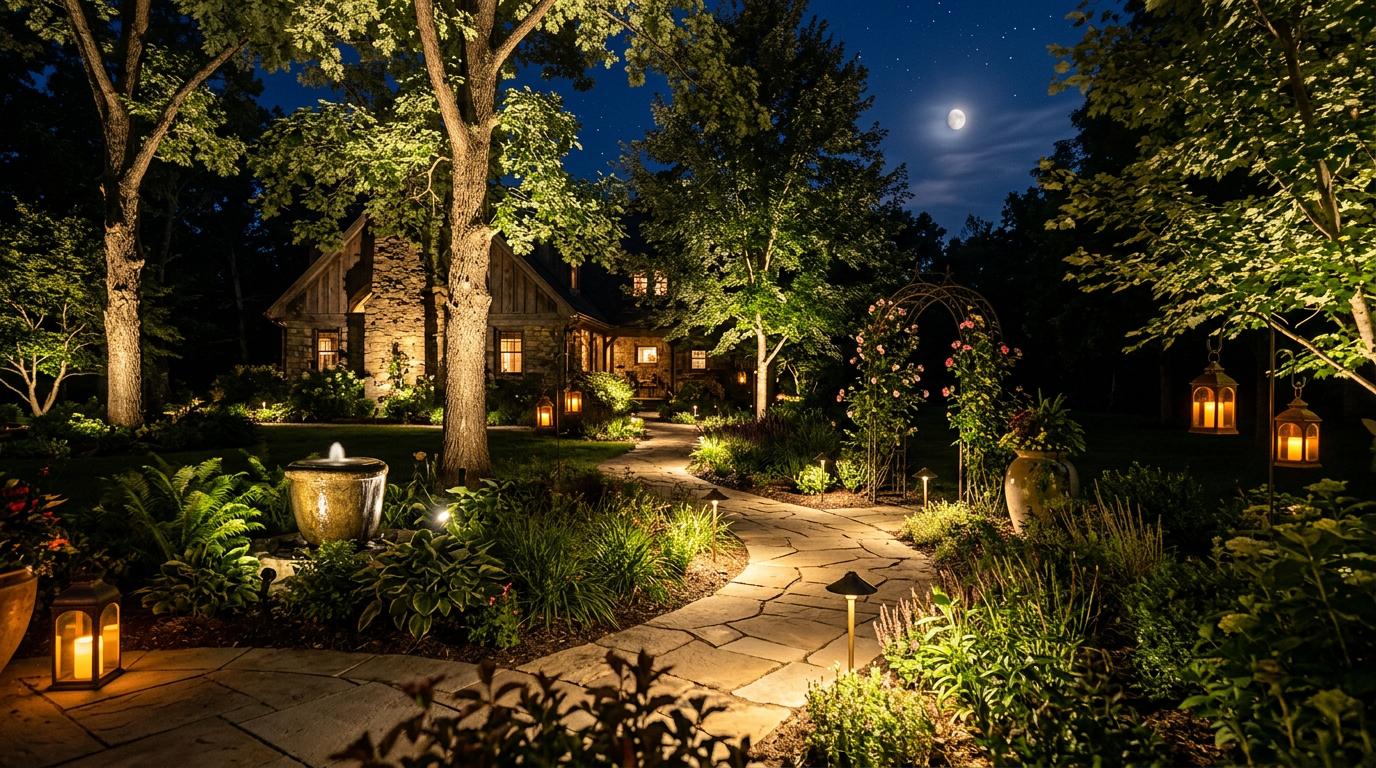
Garden Lighting Transforms the Night
A garden that goes dark at sunset wastes half its potential. Thoughtful outdoor lighting extends your enjoyment of the space, highlights your landscaping, improves security, and creates a magical evening atmosphere.
Pathway Lighting
Well-lit pathways prevent trips and falls while guiding movement through the garden. Low bollard lights, ground-level markers, or solar stake lights along walkways provide practical illumination. Space them 6-8 feet apart for consistent coverage. Warm white (2700K) feels welcoming rather than institutional.
Uplighting
Uplights placed at the base of trees, large shrubs, or architectural elements create dramatic shadows and silhouettes. A few well-placed uplights transform a flat, dark yard into a dimensional nightscape. Use sparingly — every tree doesn’t need a spotlight.
String Lights
The most universally flattering outdoor lighting. String lights draped between posts, trees, or structures create a canopy of warm light. They’re affordable, easy to install, and instantly create a festive, inviting atmosphere. Choose warm-toned LED bulbs for energy efficiency without losing the warmth.
Spotlights and Accent Lighting
Direct attention to your garden’s best features — a beautiful tree, a water feature, a sculpture, or an architectural detail. The contrast between lit elements and dark surroundings creates drama and depth.
Solar Options
Solar-powered lights require no wiring and zero electricity cost. Modern solar lights are significantly brighter and more reliable than early versions. They work best in locations with good daytime sun exposure. Solar pathway stakes, spotlights, and decorative lanterns all perform well.
Low-Voltage Systems
For a more permanent, powerful setup, low-voltage (12V) landscape lighting systems are safe, energy-efficient, and flexible. A transformer converts house current to safe low voltage, allowing you to run cables through the garden and connect multiple fixtures. Most homeowners can install these systems without an electrician.
Water Feature Lighting
Underwater lights in ponds, fountains, and pools create mesmerizing effects. Even a small tabletop fountain with a built-in LED adds luminous beauty to an outdoor space.
Fire as Light
Fire pits, outdoor fireplaces, torches, and candle arrangements provide the warmest, most atmospheric outdoor light. The flickering quality of firelight is psychologically comforting and creates a natural gathering point.
Safety and Security
Motion Sensors
Motion-activated lights near entrances, driveways, and dark corners provide security lighting that activates only when needed.
Stair Lighting
Every outdoor stair should be lit. Recessed step lights, solar markers, or low-mounted path lights prevent dangerous falls.
Timer Controls
Set outdoor lights on timers or photocells so they turn on at dusk and off at a reasonable hour. Consistent lighting patterns also deter unwanted visitors.
Design Principles
Less Is More
A few carefully placed lights create more beauty than a flood-lit yard. Dark areas between lit elements create contrast and mystery.
Warm Color Temperature
Stick with 2700K for outdoor lighting. Cooler temperatures look harsh and attract more insects.
Hide the Source
The best outdoor lighting is visible by its effect, not by glaring bulbs. Shield bulbs, use indirect lighting, and position fixtures so you see the lit object, not the light itself.
Layer Your Lighting
Combine ambient (string lights), accent (uplights), task (pathway lights), and decorative (lanterns and candles) for a rich, dimensional outdoor lighting scheme.